

Article
Gluesync 2.2.11: Query Studio transactions, CoreHub CDC checkpoints, MCP server and rebuilt Grafana
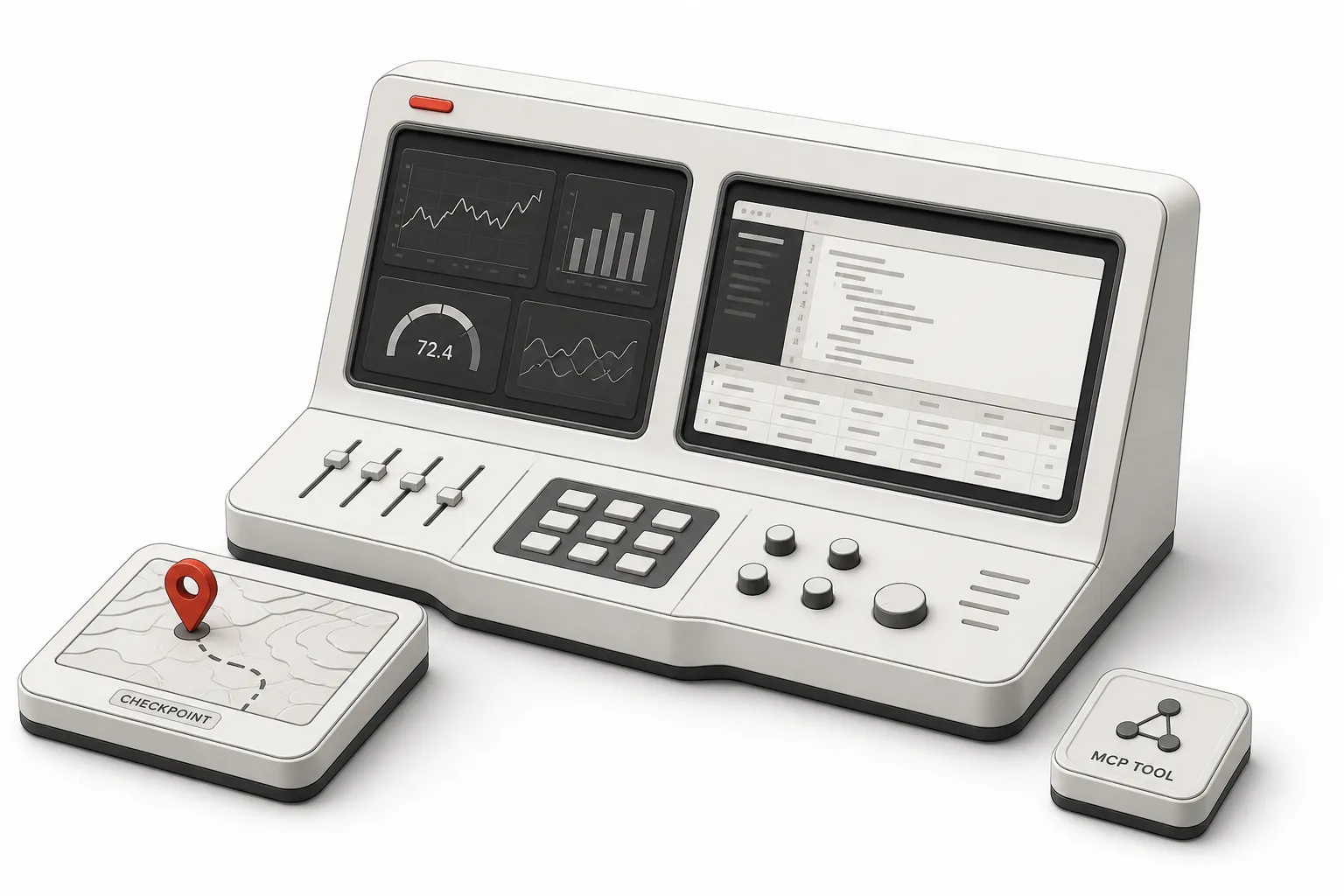
Gluesync 2.2.11: Query Studio transactions and mobile, CoreHub CDC checkpoints, Smart Alerts allowlist, Core Hub MCP server, and Grafana that separates source lag from hub latency.
Gluesync 2.2.11 is now generally available. This release focuses on operational truth: Query Studio grows real transactions and mobile access, Core Hub owns CDC checkpoints so readers survive a move, Smart Alerts become an allowlist with Low / Normal / High sensitivity, and the official Grafana pack finally separates source CDC freshness from Core Hub internal latency.
Version 2.2.11 also ships an in-process Core Hub MCP server (52 tools under the same RBAC), a live SQL connection registry, and the internal foundations of a reusable connections catalog. Below is a concise overview of the headline capabilities, fact-checked against the official release notes.
Query Studio: transactions, XLSX, edit-in-place and mobile
Query Studio remains the SQL workbench inside Core Hub. In 2.2.11 it adds the features operators asked for after the first week:
- Begin / commit / rollback on a dedicated connection
- Download result sets as
.xlsx - Update a cell in place without a round-trip through a separate editor
- Query Studio on mobile, alongside existing pipeline monitoring
- External modules (including Chronos) can call Query Studio; Oracle CLOB / NCLOB cells render as text; Couchbase querying via SQL++
Grafana + Prometheus: source lag versus Core Hub thinking-time
The official Core Hub metrics dashboard is rebuilt around KPIs you actually use at 2 a.m. CDC reader freshness uses gluesync_read_checkpoint_age_seconds so you can tell source lag from Core Hub internal stopwatch. Panels also cover rows and bytes delivered, stalled entities, JDBC connections by purpose (pipeline vs Query Studio vs Query Forge), HikariCP pool pressure, host CPU, JVM heap/GC, and live smart-alert thresholds on the same charts.
The /metrics scrape expands with entity-heartbeat configuration, connection totals, JVM runtime, Ktor HTTP timings, and checkpoint/pool series when those subsystems are active. See Grafana dashboards and the metrics reference.
Smart alerts: allowlist and Low / Normal / High
In Settings → Thresholds, Monitored objects is now an allowlist: empty means nobody, and new objects stay off until you add them. Detection is Low / Normal / High plus a cooldown. What still fires: source watchdog (hard floor + heartbeat), target idle stall, and an optional latency ceiling. Nested seasonal / EWMA / latency-pattern knobs may remain on the wire for compatibility but no longer wake you. Pipeline-level overrides sit on top of global defaults. See Alert thresholds.
Core Hub MCP server
An MCP server now runs inside Core Hub: same JVM, same RBAC, no sidecar. Point Claude, Cursor, or any MCP client at /mcp or /mcp/http for 52 tools covering pipelines, entities, metrics, and Query Studio, plus per-agent SQL tools discovered from the caller's token. Remote clients can connect by IP; discovery works against a self-signed HTTPS Core Hub.
CoreHub-managed CDC checkpoints
Cache-based CDC readers persist position in Core Hub instead of a local checkpoint file. An agent move or restart no longer resets the reader; read errors retry instead of jumping the position. AS/400, MySQL, MariaDB, Informix, and Oracle LogMiner ship in this release, with REST/WS exposure and Prometheus scrape series when a reader has persisted a position.
Live connection registry and connections catalog
Core Hub tracks every live SQL connection and its purpose (pipeline task, Query Studio, Query Forge). Admins can see personal access tokens and last-used time; the same snapshot scrapes as Prometheus gauges (gluesync_db_connections_active / _total). See connection pool management in the docs.
Database credentials are also extracted from the per-pipeline encrypted blob into a reusable global catalog internally. Custom-property secrets such as logminerPassword stay out of view-only responses. There is no Control Plane UI yet for picking a shared connection in this drop—the catalog is the foundation; the wallet UI follows.
Additional platform improvements
- Core Hub: insert conflict strategy per entity (
UPSERT/SKIP/FAIL); snapshot-only entities; field functions after a mapping UDF; scalar function calls evaluated by the target RDBMS; entity status WARNING on smart-alert threshold vs ERROR for real exceptions; delete pipelines in maintenance or warm-up; drop trigger/CDC/shadow/staging objects when an entity is deleted on trigger-based and CDC/shadow sources. - Chronos: Query Studio actions on schedules, chained events, platform events, and webhook triggers.
- Agents: PostgreSQL replication slot dropped on teardown (GSSD-534); user-configurable parameters for IBM Db2 LUW CDC and triggers agents; per-table read CCSID override on IBM i; binding and insert-path fixes across Cassandra, ScyllaDB, GridGain, and Azure Cosmos DB.
Deploy Gluesync 2.2.11 today
Gluesync 2.2.11 is production-ready for cloud, virtualized, containerized Kubernetes and OpenShift deployments. As with every major update, Gluesync may require a few minutes to restart after the update is applied.
For the full changelog and configuration detail, read the official Gluesync 2.2.11 release notes.
Ready to put Query Studio, CoreHub checkpoints, and the rebuilt metrics pack to work in your estate? Request a free 30-day trial.